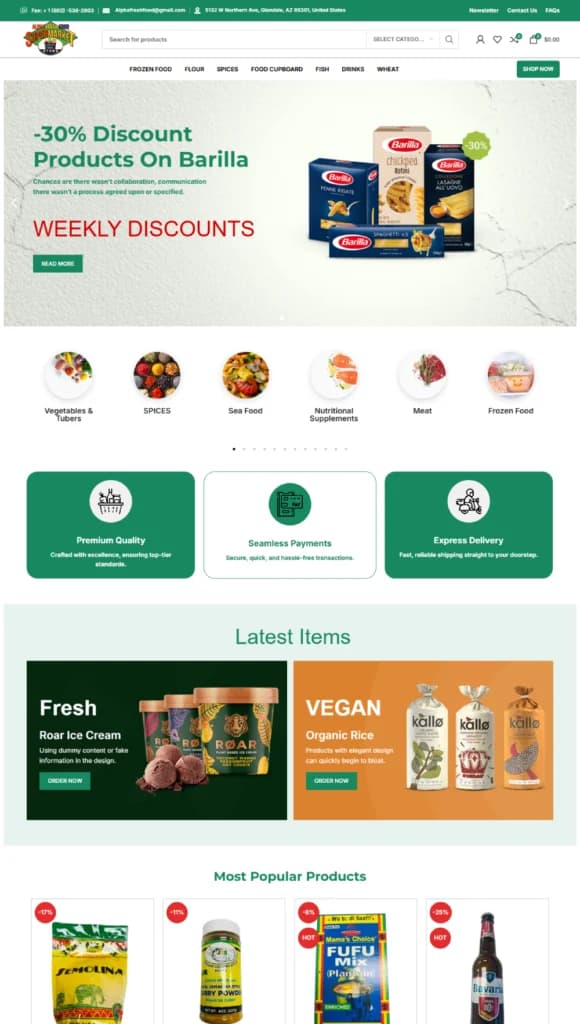
Shopify Stores BuiltAround Products,Customers and Growth
Attors designs and develops Shopify storefronts around product discovery, merchandising, conversion and the workflows your commerce team manages every day.

Use the operating model, content, commerce and integration requirements, rather than platform popularity, to decide whether Shopify is the right direction.
Choose Shopify when managed commerce infrastructure, a focused merchant admin and a mature app ecosystem match the way your team sells.
Consider WooCommerce or custom commerce when content architecture, checkout behavior, data ownership or operational rules need control beyond the approved Shopify model.
Platform capability matters, but the project succeeds when customer journeys, team workflows, connected systems and technical responsibilities are planned together.
Review Your PrioritiesCollections, filters, search, navigation and product data should help customers reach the right product with fewer unnecessary steps.
Reusable Liquid sections and blocks should support launches, campaigns and product storytelling without weakening the approved storefront system.
Products, variants, metafields, markets and collections need a maintainable structure that works across storefront and operational workflows.
Every app should solve a confirmed requirement, use approved data access and have a visible owner for cost, updates and support.
Cart, checkout, consent and measurement need coordinated testing so commercial decisions are based on dependable customer-journey evidence.
Theme releases and migrations need staged validation across product discovery, cart, checkout, integrations and priority conversion paths.
The final scope combines the platform’s proven capabilities with focused design and engineering. Every feature, extension and integration needs a clear purpose, owner and acceptance requirement.
Discuss Your Shopify RequirementsLiquid templates, sections and blocks engineered around the approved storefront and merchant workflow.
Product types, metafields, collections, filters and navigation structured for discovery and merchandising.
Responsive product, cart and content journeys designed around clarity, trust and the path to purchase.
Currency, language, market content and regional dependencies planned against the stores and plans in scope.
Approved apps, APIs and webhooks connected with visible data ownership, limits and failure handling.
Theme settings and reusable content patterns that support safe day-to-day campaign updates.
Efficient assets, semantic templates, crawlable content and measured storefront performance.
Device, browser, commerce and tracking checks with documented launch and ownership responsibilities.
Your written proposal confirms the exact architecture, interface, content model, integrations, testing and handover included. Platform subscriptions, paid extensions, content production and ongoing support remain separate unless named.
Theme, template, catalog and integration decisions documented as one storefront system.
Reusable Liquid sections and blocks aligned with approved merchandising patterns.
Products, variants, metafields, collections and navigation structured for discovery.
Practical content controls for campaigns, promotions and product storytelling.
Required connections documented with permissions, data flow and ownership.
Consent, analytics and priority commerce events mapped for dependable reporting.
Product, cart, checkout, tracking and release-critical journeys tested.
Access, editing guidance and ongoing operating responsibilities confirmed.
A Shopify migration can affect catalog data, customer journeys, redirects, tracking and connected operations. We inventory the source system, map the approved destination and validate the rebuilt store before launch.
Product relationships, options, pricing and inventory fields are mapped before import.
Collection rules, filters, menus and discovery paths receive approved destinations.
Priority URLs, titles, canonicals and redirects remain part of the launch plan.
Images, files, alt text and content associations are inventoried and revalidated.
Required systems, app replacements and data handoffs are checked against Shopify.
Permitted historical data is assessed against access, privacy and platform constraints.
Analytics, campaign attribution, consent and priority events are tested again.
Payment, shipping, tax, notification and fulfilment journeys are validated end to end.
Attors turns business goals and platform requirements into a controlled delivery plan with reviewable outputs, visible dependencies and accountable decisions.
Explore Our Full ProcessConfirm commercial goals, audiences, catalog, markets and operational constraints.
Define navigation, product data, templates, apps and responsibilities.
Plan discovery, product, cart and campaign journeys.
Build responsive Liquid sections, blocks and templates.
Connect approved payments, CRM, marketing and operational tools.
Validate catalog, cart, checkout, accessibility and tracking.
Release with redirects, analytics and operational checks.
Transfer documentation, access and merchant guidance.
Practical answers about platform fit, design and development, content management, integrations, migration, SEO, performance, timelines and cost.
A Shopify development agency plans and builds storefronts around products, customers and commerce operations. Attors can provide store architecture, custom theme development, product and collection setup, app integrations, migration, testing and handover. The final scope identifies content, data, third-party fees and ongoing responsibilities.
Shopify is a strong fit when commerce is the primary website workflow and the business values managed hosting, a focused merchant admin and an established app ecosystem. Product complexity, markets, integrations, checkout requirements and recurring platform costs should still be reviewed before selection.
Yes. A custom Shopify theme can use Liquid templates, sections, blocks, metafields and app blocks to create a reusable storefront system around the approved design and merchant workflow. Custom work is scoped against Shopify’s current platform and plan boundaries.
Yes. We review the current theme, products, analytics, apps, URLs and priority journeys before changing the interface. A redesign should improve confirmed problems while protecting useful content, data, search signals and working operational flows.
Products, variants, collections, media and selected customer or order data can often be migrated when the source system and Shopify provide suitable access. We map priority URLs and redirects, but exact data coverage depends on source quality, privacy requirements and platform constraints.
Apps can add useful capabilities but also introduce fees, scripts, data access and vendor dependencies. Attors reviews whether an app, native Shopify capability or custom integration is the appropriate owner before it is included in the architecture.
The storefront can provide crawlable content, semantic headings, metadata, canonicals, structured data and internal links. Product information and helpful content must still be accurate and distinctive. No agency can guarantee rankings, AI citations or inclusion in generated answers.
We review theme code, images, fonts, scripts, apps and critical customer journeys, then test the agreed templates and devices. Performance is affected by the final app stack, content and later merchant changes, so responsibilities remain visible at handover.
Timeline depends on templates, product data, content readiness, custom theme work, apps, integrations, migration and approval speed. Attors confirms a project-specific delivery plan after the commercial and technical dependencies are documented.
Cost reflects strategy, design, theme engineering, catalog setup, integrations, migration, testing and handover. Shopify plans, paid themes, apps and ongoing support are identified separately where relevant.
Share the current website, business goals, required customer journeys and platform constraints. Attors will use those inputs to recommend a practical scope rather than a generic package.
Design depth, page and template count, content or catalog readiness, integrations, migration, QA and stakeholder feedback shape the delivery plan.
Strategy, design, implementation, platform configuration, integrations, migration, testing, licenses and post-launch responsibilities shape the written estimate.
Business, content, technical access and launch decision-makers keep feedback and acceptance accountable throughout delivery.
The proposal defines deliverables, platform and third-party costs, client inputs, ownership, assumptions, exclusions and ongoing responsibilities before work begins.
Review selected Attors work to understand the interface quality, responsive execution and production discipline we bring to shopify development projects. Project cards retain their verified CMS content and do not imply an unrecorded platform attribution.