Email: [email protected]WhatsApp: +92 309 9867390
Attors Technologies
Attors Technologies

Explore Attors

Project Enquiries

Shadola Road AreaGujrat, Pakistan
[email protected]+92 309 9867390Start a Project
Fashion E-commerce Development

Turn Brand StoriesInto ShoppableCollections

Attors designs fashion e-commerce experiences that connect campaign imagery, collection structure and product discovery. Editorial expression remains strong while customers can still find, compare and buy the right item.

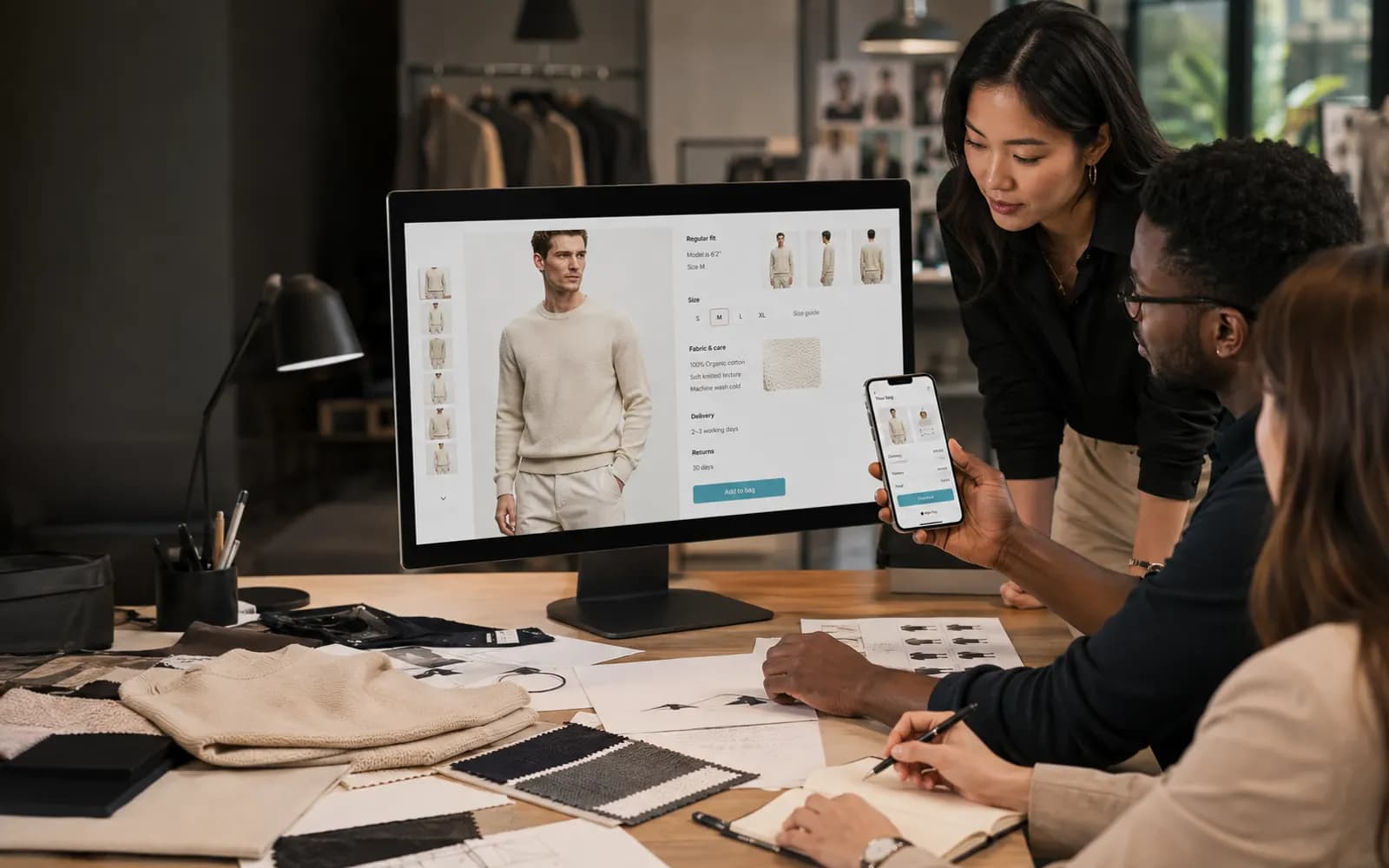
Fashion brand team reviewing an online collection and merchandising plan
Fashion Commerce Foundations

What Fashion Shoppers Need From a Modern Store

Fashion discovery is visual, but a buying decision also depends on fit, product detail, availability, delivery and returns expectations.

A strong fashion store connects brand expression with usable merchandising and dependable purchase information across devices.

01

Collection-Led Discovery

Connect campaigns, categories, edits and search without creating disconnected paths to the same products.

02

Stronger Product Confidence

Present imagery, fit, size, fabric, care, availability and policies in a clear hierarchy.

03

Focused Mobile Shopping

Prioritize browsing, variant selection, cart and checkout around small-screen behavior.

04

Connected Retail Operations

Coordinate product, inventory, order, fulfilment and returns handoffs around defined owners.

Connected Fashion Customer Journey

Connect Collection Discovery to Purchase and Retention

Guide shoppers from campaign or category discovery into the right product and variant, then keep delivery, returns and repeat engagement connected to the promise made before checkout.

01

Inspire

Campaigns, edits and landing pages introduce a relevant collection.

02

Discover

Navigation, search and filters help shoppers narrow products.

03

Choose

Fit, size, imagery and policies support product confidence.

04

Purchase

Responsive cart, checkout and payments reduce avoidable friction.

05

Continue

Order, returns and lifecycle touchpoints support service and repeat visits.

Selected Attors Work

Explore Selected Commerce and Experience Work

Review genuine Attors projects and discuss the visual, merchandising or interaction patterns relevant to your fashion brand. Projects are not described as fashion results unless their CMS records support that description.

Explore All Work
Fashion E-commerce Capabilities

Commerce Development Around Merchandising and Conversion

Build the brand, product and operational capabilities that support how collections launch and how customers shop.

Merchandise Collections

Connect campaigns, edits and product discovery.

  • Collection architecture
  • Campaign landing pages
  • Search, filters and recommendations

Build Product Confidence

Present variants, fit and product detail clearly.

  • Product page UX
  • Size and fit content
  • Media and variant behavior

Convert on Mobile

Create a focused route from product to payment.

  • Responsive storefront UX
  • Cart and checkout
  • Payments and subscriptions

Connect Operations

Align product, inventory and customer workflows.

  • Catalog and inventory integrations
  • Order and returns handoffs
  • CRM, analytics and testing
Fashion Commerce Platform Fit

Choose a Foundation for Merchandising and Operations

Select the commerce architecture from catalog complexity, campaign workflow, markets, integrations and team ownership, not from platform popularity alone.

Review first

  • Catalog, variants and collections
  • Campaign and editorial workflow
  • Markets, payments and fulfilment
  • Inventory and returns systems
  • Performance and ownership
Shopify

Shopify

Best when A managed commerce foundation and established checkout are priorities for the operating model.

Plan for Apps, theme constraints, catalog rules, markets and recurring platform costs.

Custom & Headless

Best when Distinctive storefronts, complex content or multi-channel needs exceed standard platform patterns.

Plan for Delivery scope, preview workflow, integrations, cost and long-term technical ownership.

Choose the platform after merchandising workflows and operational trade-offs are explicit.

Fashion Commerce Delivery

From Collection Discovery to a Controlled Launch

Align brand, merchandising, content and operations before build. Review real products, variants and campaign states at clear gates so launch quality is not judged from placeholders.

  1. 01

    Commerce Discovery

    Define customers, collections, markets and goals.

  2. 02

    Store Architecture

    Map catalog, content, markets and systems.

  3. 03

    Experience Design

    Review real collection and product journeys.

  4. 04

    Build & Integrate

    Implement storefront, checkout and handoffs.

  5. 05

    Launch Readiness

    Validate products, variants, payments and returns.

  6. 06

    Launch & Handover

    Release with campaign and operational owners clear.

Attors leads

Experience architecture, storefront implementation, agreed integrations, responsive QA and release preparation.

Your brand reviews

Products, fit information, imagery rights, policies, merchandising, payments and operational rules.

Risk controlled

Track catalog gaps, campaign approvals, integration limits and checkout dependencies before launch.

Performance & Commerce Visibility

Improve Fashion Discovery and Conversion Over Time

Review speed, search readiness, merchandising behavior and purchase events together. Prioritize changes around customer impact and operational ability to maintain them.

  1. 01

    Measure

    Baseline speed, search health, discovery and purchase events.

  2. 02

    Diagnose

    Find catalog, content and checkout friction.

  3. 03

    Prioritize

    Order work by customer impact, brand goals and effort.

  4. 04

    Improve & Validate

    Release focused changes and check the outcome.

Frequently Asked Questions

Fashion E-commerce Development FAQs

Answers about fashion storefronts, merchandising, product content, platforms, integrations, performance, migration and scope.

What makes a fashion e-commerce website effective?

It connects a recognizable brand experience with usable collection discovery, clear product information and a dependable purchase path. Shoppers should understand fit, size, fabric, care, availability, delivery and returns without searching across disconnected pages. Mobile performance and merchandising control matter because campaigns and assortments change frequently.

How should fashion collections and campaigns work together?

Campaign pages can introduce the story and edit, while collection and product structures support browsing and purchase. Use clear relationships so featured products remain discoverable after a campaign ends. Define scheduling, approvals, product availability and archive behavior. Avoid landing pages that become dead ends or duplicate category content without a distinct purpose.

What product information helps reduce uncertainty?

Use consistent imagery, variant selection, size and fit guidance, fabric and care details, availability and clear delivery or returns information. The exact content depends on the product. Avoid unsupported sustainability, material or performance claims. Assign owners for updating fit guidance and policies so the page does not promise more than operations can deliver.

Which platform is best for a fashion e-commerce store?

The answer depends on catalog and variant complexity, campaign workflow, markets, checkout needs, integrations, team skills and ownership. Shopify, WooCommerce and custom or headless approaches have different trade-offs. Attors compares requirements and supported capabilities before recommending an architecture rather than selecting a platform from category alone.

Can a fashion store connect to inventory, fulfilment or returns systems?

Connections can be scoped when providers offer supported interfaces and accountable owners. Define product identifiers, inventory behavior, order states, returns data, permissions, fallbacks and errors. Near-real-time claims require evidence from the actual systems. The public experience should communicate availability and policy information consistent with operational reality.

How can a fashion store improve organic and AI search visibility?

Use server-rendered collection and product content, descriptive headings, meaningful internal links, appropriate metadata and accurate product structured data supported by visible information. Technical readiness helps systems understand products and entities, but rankings and AI citations cannot be guaranteed. Distinct, useful collection and product content is more valuable than duplicated keyword pages.

Can a fashion e-commerce store be replatformed safely?

Inventory products, variants, collections, URLs, metadata, customer-facing policies, integrations and analytics before migration. Map retained and redirected destinations, reconcile product identifiers and test payments, orders, fulfilment and returns. Use realistic catalog data during QA. Search and commercial outcomes require monitoring after launch rather than assuming platform equivalence.

What affects fashion e-commerce project scope?

Scope depends on catalog and variant complexity, markets, product content, photography workflow, campaign templates, search and filters, checkout, subscriptions, loyalty, inventory, fulfilment, returns and migration. Share the current store, representative products, priority markets, connected systems and launch calendar so Attors can identify dependencies and prepare a project-specific scope.

Start a Project
Plan Your Fashion Commerce

Discuss Your Fashion E-commerce Growth Priorities

Share how customers discover collections, what they need to choose products and which systems support purchase and service. Attors will use that context to shape the right next planning conversation.

  1. 01

    Customer journey

    How shoppers discover and choose products

  2. 02

    Commerce platform

    Catalog, checkout and market requirements

  3. 03

    Retail operations

    Inventory, orders, fulfilment and returns

  4. 04

    Growth direction

    The collection or journey to improve

Useful project context

  • Current fashion store
  • Priority collections and markets
  • Product and purchase journey

Important dependencies

  • Catalog and content readiness
  • Campaign and policy approvals
  • Commerce and operational systems

What happens next

Attors reviews the customer journey, catalog and operational dependencies, then recommends the most useful scoping conversation.

Stronger merchandising. Clearer product decisions. Controlled operations.